Wednesday, April 16, 2008

A Letter From Leslie OnThe Road - 1962


Leslie H. was a sister in our little San Francisco band of dirty Peaceniks. I lost touch with her years ago so I can't ask her for permission to print this letter to me. But it's a document well worth sharing - it seems to me a brilliant picture of The Life, as we baby beatniks conceived it in that long ago year of 1962.

I don't have much left from that era, but God is gracious, and left me this letter. How can I not share it with you? That it still exists is a minor miracle.

Leslie is eighteen and on the road with Peter, her lover (they married later, a true-love match.) She's living the life we loved. The long hitch-hiking journeys, the drugs, a bit of the world-weary feeling I associate with those unpsychedelicized times, the uncapitalized sentences, the eternal ongoing planning of adventures to come. And of course - the literate self-awareness and ability to express herself well on paper.

Together they make up the essence of my times, kiddos - welcome to the winter of 1962. The day I received it the snows were beginning to fall over Long Island and the first winter rains were pouring into the sewers of Lily Alley, San Francisco.

I've added a few links to references that may be obscure today.


christopher christopher christopher

how happy i am to get your lawn letter--i'm childishly delighted and even overjoyed. here for the last couple of days i had been, not homesick, but kind of surprised and sad at being 3000 miles away from anyone who really knew how i function. (this is the result of being bored silly and therefore starting to take it out on peter, but trying not to, because he really doesn't react well to threats of leaving or not sleeping with him at all.)

all this culminated last night with peter pouring chocolate milk shake on my head and i throwing my newly acquired enovid out the car window. i cried myself to sleep thinking of the past with the help of three seconal. but all is slightly better this morning--peter and i woke up early and talked and made love. so i have made him his breakfast, listened to e power biggs playing bach's royal instrument (the organ), finished sanding, oiling, stringing, and tuning our new guitar--we took off all the mexican finish and wanted to leave it like that and oil it, but we ended up some how putting mahogany varnish on it--, and teaching myself bach's minuet in g major on the piano and guitar.

a new thing for me--a snow storm the other night. if i had been younger or marguerita i would have run outside in it naked. now the snow has been here for two days and it is melting and looking a bit soiled.

we have been here for three weeks and i haven't yet seen new york city, which is why i think we hitched out here. i can't really remember why we came anymore except it has something to do with rolexin and the president and me and peter and new york/and cuba and kruschev and bombs

once i had a job for two weeks where i had to type all day.

i could tell you what happened to us hitch hiking and the people we met and what they said but it is not really very interesting or xxxxxx

(typing fades and gets scratchy-looking)

What is wrong with the fucking typewriter?

(she switches to pencil)

i will use a drafting pencil for want of a pen.

(she switches to blue ink)

i found a pen - i don't like it

(this time she switches to black ink with bold point)

here is a fountainpen. i'll use this.

anyway my point was that before i started i thought that hitch hiking to new york would be a great adventure and it wasn't at all just mostly cold and boring. i have lost all my faith in jack kerouac.

we did meet some wonderful people in madison, wisconsin. They were students and mostly hippies but some cool - not cool really, but sweet. peter and i set out to close the university of wisconsin by turning everyone on to rolaxin (romilar there) i was introduced to everyone as the high priestess of romilar. we were staying with two great friends of peter's - sam and john. one night we were all high and someone knocked on the door. john answered it and a man asked - do you have any cockroaches. sam told him - yes, but they're on our side.

the night before we left i got into a drinking contest with peter. i lost miserably. it's the first time i've ever been drunk. i vaguely remember crying for two hours about my abortion - peter was very sweet and says i really wasn't too bad. i also somehow cut off a large section of big toe. i am now firmly convinced that pot is so much better for teen-agers than booze.

i don't want to write on and on and bore you. so i will shortly close.

how are you and linda and expected baby? and working, being responsible, etc.

everyone there except peter's mother thinks we're married. address any future mail accordingly. i even have a woolworth's golden wedding band ($1.00, without tax) i am also maybe pregnant, which is fine with both of us. peter is a very fine person to have babies from.

we have plans. we will be back in san francisco by april (by way of virginia, etc.) and then peter and i will get jobs (if i am not pregnant, i will) save money until june. take a bus to mexico city - some odd $60 dollars (both) and go to mexico city college. my parents will support me - i will support peter. will have baby in mid-August and let a maid take care of him ($15 a month). i want so much to learn things! i mean, at college - therefore a maid for the baby. i am going to see all the art galleries and museums in new york (while peter works - he may be able to get a job as an artist's model for 7.50 an hour). i am going to learn to really cook - no instant anything. and find a place to practice piano, and look at new york and maybe sew pregnant clothes. - why do i always plan things?

anyway write to me - maybe often. i need it. are you kidding about the naval? tell me about it.

have you seen or heard of riley, teresa, and george. do you have addresses of the first two?

very much love to you - and i will think about you.

[this letter started out fine but it bogs at the end and is incoherent - i'm sorry]

leslie


Labels: , , , ,

Sunday, April 06, 2008

Pig Of The East Village

The talking pig and his Russian princess bride are back, so let the party roll!

We got in about 1:00 AM Friday morning after a circulation-sluggishing, butt-deadening, headache-inducing transmigration of the continent. Maybe the guys in the wagon trains had it right. Except neither of us got cholera.

We've been in New York. In the East Village to be exact. I was there to study the ways of sonic youth, the kids who wear tight black jeans with red canvas sneaks and heavy grey hooded sweatshirts under black denim jackets while crossing Positively 4th Street to somewhere romantic holding paper cups of Greek diner coffee while checking their ipods for the proper sound track.


Perhaps this is the romantic little shop they have in mind. Maybe they're on their way to see the Baroness! With her special Love Potion No. 9, sonic youth can meet their own mini-dressed easter bunny nuns.


We, however, were on our way to see the Baroness' cat Stripey.


Stripey is an elderly cat. She's seen them all pass her window: the beatniks, the hippies, the punks, the skunks, the junkies and the flunkies. They came, they got old, they OD'ed or went home, and more got off the bus. I was one myself.

When I arrived in the East Village in the summer of 1961, Bob Dylan was the rage at Gerde's Folk City. I couldn't get in so I settled for Peter Yarrow the next night. I'd never heard of him. If you're under thirty, you probably have still never heard of him, but he got big for a while with Peter, Paul and Mary. Later he used to come round the Haight a lot. I'd see him in the Panhandle sitting on a log with his girlfriend listening to Mt. Rushmore or the Dead, still just a normal person.

I stayed on East 7th Street most of the summer with Kirk, a filmmaker I'd met in Mexico the previous spring. I was nineteen. I'd already seen it all. Except I'd never seen a cockroach before. Or a bar-in-the-floor police lock to keep the junkie burglars out. Seen a few jingle-jangle mornings though.

I walked the steamy summer sewery-smelling streets all day. Ate in a cheap dairy restaurant on Second Avenue. Found out about knishes, blintzes, pirogies, kasha, borscht and I ordered more the next day. I drank beer at the White Horse Tavern and paid homage to the bar stool where Dylan Thomas had drunk himself to death eight years before.

I met a girl who worked for the Grosset and Dunlap, publisher of the Nancy Drew series. Her job was to answer all the letters from eleven year old girls to Carolyn Keene, their fictitious author. Jodie was a minion, but an employed minion working for a real publisher and she got to impersonate a famous imaginary author for a living. I was so impressed I got too wasted to walk back to Kirk's apartment and spent the night in her bathtub.

That's how it was in those days. Another thing I'd never yet experienced was sex on a first date. There were probably fast girls who did it but, as far as I could personally verify, they were all creatures of legend.


Actually, that wasn't the only part of me that was raging. My head was raging as well as my penis, and my heart was raging too. Give me love! Give me true love! Give me another burning heart like mine. Give me a star! A burning raging star, preferably a blonde one.

Now I'm back in my little gray home in the west trying to write it all down. While I was gone a girl in tight black jeans and red sneaks came by the blog and commented that my stories were rad and that she admired my being a beatnik and all. Thanks, Maya, you made my day.

We old pigs are supposed to go eat our corn. Doze in the sun. But my heart burns like it always did. It still feels young. I just try not to look in the mirror too much. I need to tell the young ones what the burning felt like in my time, how it feels to grow old but with a life behind you that's worth remembering. Build my own Brooklyn Bridge across the years between the hip generations. Except hip means something different now. I love all the old beatniks and hippies who come by the blog, but the Pondering Pig is not just for old hippies. It's for young beatniks too. And middle-aged ones. You just got have a burning heart. Or at least remember the one you used to have.


Photos by Patrushka

Labels: , ,

Monday, March 03, 2008

Oil Under The Streets Of Los Angeles


Here's a photo from my Dad's collection of 1920s snapshots. It's June 1925 and the Belmont High Girl's Athletic Association is showing off for Club Day. Click on it so you can see them better. That's Dad's girl friend LaVerne in the middle. Dad always had the cutest girl friends. You should have seen my mother, for instance. A real wow. The cat's pajamas. In fact maybe I'll put up her picture too...


OK, here's Mom in 1926. She was an acting student at the Egan School of Dramatic Arts and this was her hand-out shot. In case anyone needed a good-looking teenager to star in a play. I tricked it out cause I don't know how to leave well enough alone.

Dad was an acting student too. They met when they were assigned to do a scene together from a popular play of the moment called You And I for the Pasadena Rotary Club luncheon. Or maybe it was called You and Me and it was the Glendale Elks Club. But you get the idea. They are young lovers having a spat. Then at the end of the scene they made it up with a big kiss. Dad always said he was kissing Mom before he even knew her last name. Well, one thing led to another - and here I am, some eighty years later, still going out to lunch on the same story. Waiter! There's a fly in my soup!

Anyway, to get back to oil under the streets of LA for a minute, last year's girl friend LaVerne and her friends are posing on the athletic field at Belmont High, which was and still is right downtown off 2nd Street. Look behind those flappers in their tennis whites, if you can take you eyes off them for a minute. I count five or possibly six oil derricks rising out of the neighborhood behind them. I just hope there won't be blood, don't you?

Labels:

Friday, February 15, 2008

Sixty-Six And All That

So what's so bad about turning sixty-six? All the cool and famous people do it. For instance, how about...Peter Tork?
He turned sixty-six this week, just like me. And don't you dare say, "Who's Peter Tork?"

(Deafening Silence)

Brother! OK, children, if you really don't know, Peter Tork was a beautiful, Grammy award winning singer from Iceland. Oh wait, that's Bjork.

Sorry. Now I've got it. Peter Tork was an funny guy from another planet who lived in Mindy's attic...hmm, that doesn't seem right either.

Let me think, He must be famous for something. Now I remember! He is from another planet but he has long pointy ears and used to have a job on the Starship Enterprise.

Oh, I don't know! I can't remember either. I'm only monkeeing around. I guess it just shows - fame is fleeting. Take for instance, Brian Jones. (Don't you DARE ask 'Who?') He'd be sixty-six this month if he hadn't drowned in his swimming pool in 1969 after being eighty-sixed from the Rolling Stones. Poor bastard. But you probably already know his sad story. If you don't, apply to Marianne Faithfull (and don't give me that 'who?' stuff again.) I only tell stories about the interesting unknowns and barely knowns of my San Francisco youth.

Anyway, what's the point of all this scrambling for fame so our names will live forever?

Like Brian Jones, for all his fame now laying in a country churchyard off the A435 forgotten by flowers and children.

Like Yvette Mimiuex (age sixty-six), beautiful freak from the future famous for her wonderful name, now immersed in money somewhere in the LA basin. Does she collect her lobby cards? And dream she'll still be famous again when the time machine lands?

Like...like...CAROL CLEVELAND! She's sixty-six, and look at her! (Oh look her up. If you know who Monty Python was, you should know who Carol Cleveland is. She was famous.)

Like Pete Best, ousted by Ringo so long ago, still organizing his next nostalgia band tour. If that promoter in Winnipeg ever calls, I'll be down pub.

Like Tom Fogerty, he waited a long time for that steamboat round the bend, but it never came. Now he's in the ground. About him, people like to say, "Wasn't he John Fogarty's brother?" Other people say, "What was Credence Clearwater Revival?"

Or like Ellen Naomi Cohen, really Cass Elliot, but really Ellen Naomi Cohen, big voiced, big bodied, still alone in a little grave in the LA hills. Just a few months older than the Pondering Pig. If she were here.

Like Fingerless Joe Novakovich, missing on San Francisco streets these long years, and following a trail of tokay glistened glass somewhere towards home...

Like Saint Jack Kerouac who vomited his guts into the toilet, cried out, "La j me rapele! La j me rapele!" (Now I remember! Now I remember!), breathed deep one farewell breath for remembrance of this rainwet earth before the black shroud finally smiled upon him.

Like the Lovely Linda, one half of rock's greatest love affair, the kind that comes with children who grow up without artillery holes in their hearts and grandchildren and a marriage that didn't let massive fame snatch love forever and homemade loaves. No early death from cancer can take that laurel from her brow. God bless that girl, also sixty-six.


Or like Country Joe McDonald (age sixty-six), who don't care (I think) that he's not headlining Woodstock any more but getting on with his life honoring Woody and Vietnam vets and still singing "It's one two three what are we fightin' for don't ask me i don't give a damn next stop is Vietnam" in the shower or in the daffodils come spring.

Like our own Saint Joan, who will matter forever, already far past her sixty-sixth, yet still on the road night after night through phantom music halls of Yugoslavia and South Carolina.


Like, I don't know, like me.

Like you, dear reader. Well, maybe not YOU. You've got too much sense.

Whaddayasay we forget the whole thing, walk over to Golden Gate Park and join The Syndicate of Eternal Friendship in a little game of Frisbee? As Jinx the Cat says, "Where are the snows of yesteryear? They're playing Frisbee in the park."

Once I heard him add, "See that dog over there? Watch out for that dog"


Photo Credits: Cryptomundo, Linda McCartney, FSM Gallery 1964-65

Labels:

Tuesday, February 12, 2008

But Now We Are Sixty-Six

Oh boy, 1948, the year I turned six. First of all, for my birthday I got a pull-dachshund on a string whose legs moved as I pulled him along. And it got even better! We went to the Russian River for a week that summer and my brother showed me how to play Cruisin' Down The River On A Sunday Afternoon on his uke. I got to go down the dusty road to the general store all by myself and I could buy any funny book I wanted. Except no horror or crime comics. But that was okay - I could read those on the comic book stand until the owner got wise.

Now I'm sixty-six, and what do I get? I get to chop ice all day. Shovel snow. Oh well, I shouldn't complain. For birthday dinner my German mother-in-law made her famous beef roladen, red cabbage, mashed potatoes and gravy, and for dessert my favorite home-made creme caramel as only my mother-in-law knows how to make it. Smooth, creamy and wonderful with that rich burnt sugar syrup slooshing down its sides to make a little lake in the bottom of the bowl. And we polished off a bottle of top-notch Cabernet, grown in my current home state of Washington. Then we watched a French movie called A Very Long Engagement. It stars Audrey Tautou, the actress who played Amelie.

You probably won't like it. It's relentlessly melancholy, like me. About a young woman who, also like me, knows to the depths of her being that love is forever. She refuses in the face of all evidence to believe her lover was killed in the Great War. For the Pig Of The Grey Skies And Rain, her performance and her character provides the penultimate revelation of a true heart. In fact, I've got to go watch it again right now.

(Two hours later) Where was I? Oh yes, I was about to start complaining.

You know me, the Complaining Pig. I've made a career out of never being satisfied. So here's what I'd really like for my birthday. I'd like to know what happened to all the loved friends and befriended lovers of my youth. All the kiddos who are wrapped in gold in my heart and whom I can never and will never forget. Here, for the third year, is my birthday roll call, with updates since last year...

Was Anyone Left Alive?

Bess Farr, AKA Lisa Farr, AKA Lisa McFadden. Dear friend and troublemaker, we were friends throughout the Sixties. The last time I saw her, she dosed me with MDA at a party. I wasn't mad at her - she just made made me realize how fed up I was with the life I was leading. But I've always felt like I deserted her when she was in trouble. And I wish I hadn't. You okay, Bess? 2008 update: Eva Wilson told me Bess died of ovarian cancer about 1992. I never got to see her again. I always thought one day we would have lunch together and she'd tell me her life had turned out okay. Bye, Bess. I wrote about you in It's Too Late, She's Gone...

Bob Gill – brother beatnik, peyote brother and card carrying YPSL. In my mind's eye, he's up on the barricades somewhere waving his ancient rifle defiantly and the Nationalists are closing in.

Bob Kaffke – diabetic Communist who rode horseback through Mexico. News: Bob is gone. Died of pneumonia in 1983 on a houseboat in the San Francisco Bay. Leo Sadorf found this link put up by his son. 2008 Update: I wrote about Bob in Kaffke of the Comsymps.

Bob Kuehn - Another of the SF State peace warriors. Ban the Bomb!

Danny Rifkin - So funny and creative. The first on our scene besides me to notice the Beatles were Something New. And he laughed at my poetry (that was good, not bad). News: Danny's still out there hitting it. I found this article about him in the San Francisco Chronicle.

David Miller - Carpenter of Walrus and Carpenter. My singing partner and best friend until I betrayed him. Last time I talked to him he called to say good-bye. He was moving to Tennessee. Funny how I still miss him after all these years.

Don Auclaire - leader of our pack, the Dirty Peaceniks, 311 Judah Street, San Francisco. 2008 Update: Solveig told me she visited him in the Mexico City jail in 1963. George Howell told me he was living in the Haight-Ashbury with Teresa Sweeney in the spring of 1964. After that he fades from view like dust on cracking film emulsion.

Donna Conroy – Tom Conroy’s beautiful beat street wife from the Delaware horse country. Tom spent half his time fighting off the pimps who wanted to sign her up. Last time I saw here she was great with child.

Ed Ginsberg - comic peyote brother, photographer and a great heart. News: Someone told me last year he is living in Budapest.

Eva Bessie - Bess' best friend, daughter of Hollywood Ten screenwriter Alvah Bessie. She was immortalized on two Fillmore posters done by her husband Wes. Still living in the Ozarks somewhere last I heard. 2008 Update: Eva is a psychologist in Missouri. Happily married these long years and now with grandchildren on her knee. We've talked and corresponded several times. God bless that little piglet who made a success of her life.

George "The Beast" Howell. A legend in his own time. A friend ran into him ten or fifteen years ago in the rugged mountains of Northern California up by the Oregon border. He was on a buying trip looking for high quality virgin wool. Something about Persian rugs. He'd picked it up living in Asia. 2008 Update: Peter Albin gave me his phone number. With awe and trepidation I called George just before Christmas. To hear again after so long that voice of legend, my North Beach comrade George the Beast, King of the Baby Beatniks...it was like watching ice melt around a mammoth frozen aeons ago with daisies still hanging from his mouth and waiting for him to trumpet once more. George lives with his sister near Clear Lake, California. He's got emphysema and can't get out much. Still appraises rare and valuable carpets. But he is still here, still on the ground, not in it. God bless you forever, brother. I wrote about George in Famous People I Never Knew #1: Neal Cassady.

Joe Novakovich - Fingerless Joe himself. He had warped fingers due to a birth defect, yet became a masterful autoharp player and stalwart of the San Francisco folk scene. 2008 Update: I've heard sad stories about Joe I will not relate until I know if they're true.

Johnny Chance - Saintly drummer for The Final Solution and first guy on our scene to notice the Beach Boys were cool. Funnier and smarter than anyone, yet he dressed like a Catholic schoolboy. He joined the Moonies and I never saw him no more. I miss his goofy smile and cracked sense of humor and Petaluma intelligence.

Laurie Sarlat - with the Long Island accent, thick black hair and blue-green eyes, she was poet Allen Cohen's consort and Wendy to this lost boy. She left town with a guy I didn't know and I never saw her again. Allen told me years later she'd joined a Christian cult. 2008 Update: She's living in Arizona. I don't know where.

Leslie Hipshmann AKA Leslie Van Gelder. Most beautiful and sweetest of the teenaged hangers-on at 311 Judah Street (funny, I was a teenager myself!). She split for New York and I never saw her again. Leslie, I still have the letters you wrote me from the East Village.

Margarita Bates AKA The Bitch. Unforgettable. News: An anonymous tipster wrote to tell me she is alive and where she is living. Thank you. 2008 Update: I wrote about Margarita in Chet Helms, Margarita And Me

Melanie Kinkead AKA Lanie da Kink - as dear a girl as I ever knew. I wrote about her in Famous People I Never Knew #2: Janis Joplin. I am back in touch with Mel thanks to the blog and she is still just as funny as ever, and still the best. 2008 Update: I visited Mel in Sacramento last summer and it was like we had been apart for five minutes. What a pal!

Michael Rachoff - Page Street friend of years but we lost touch in my wanderings. 2008 Update: I've talked to Michael on the phone several times and hope to see him in a few weeks. He still lives in San Francisco.

Peter Kraemer - Virgina City filmmaker and leader of the Sopwith Camel - the first San Francisco band to hit the charts. 2008 Update: I recently heard Peter is living in Mexico and planning another reunion of the Sopwith Camel.

Peter Walters – my boyhood best friend who lived at 47th and Balboa. Peter didn't care if I was sick in bed much of my childhood. He'd always come by and play games and make puzzles and draw battleships with me in bed and him sitting in a chair beside me. What a great kid!

Peter Weiss –tough kid from the Bronx who danced with Ann Halprin's Dancer's Workshop. Last time I saw Peter he and his girlfriend were heading for Japan.

Riley Turner - holy tennies street kid from Lowell High School. I wrote about him in Song For Relay Tornfoot.

Solveig Otvos, AKA Solveig Rimkeit, AKA Ruth Weissinger - the beautiful Latvian. Where are you, Solveig? I still hear you laugh in my dreams. 2008 Update: I've talked to Solveig, now known as Rochanah at her home in Chico, California. She claims she remembers nothing but she remembers everything. Her laughter still brings joy to ice.

Tom Conroy - the North Beach street kid cartoonist who got me busted in Oakland. Tom dealt in Prince Valiant and Flash Gordon comic strips and could spot newspaper insulation in every blowndown ghetto redevelopment Victorian we broke and entered. 2008 Update: George Howell told me Tom lives in New Mexico and has a successful business running a stock photo archive.

I know where too many of my early friends are today though – in the ground.
Here’s to you, Rodney Albin and Chet Helms and Allen Cohen and Wendy Norins and Tom Hobson and Bess Farr and all the rest of you – friends forever.

I have a lifetime of stories to tell just about these guys. There they are through my window: young and sunburnt and storm-tossed - the best of the best, the San Francisco kiddos of the pre-invasion Sixties - my generation.


Labels:

Thursday, January 24, 2008

It's Too Late, She's Gone

Yesterday I learned Beth died. The beautiful girl whose strings are tied into my heart as fast today as they were the last time I saw her in 1968. My sad girl, my wicked girl, a friend who was a lot like me. Somehow I always thought I'd see her again one day and she'd tell me she was all right. She had come through. But she never did.

I first met Beth at San Francisco State in the fall of 1961. I was new on the scene and didn't know anybody yet. I'd just transferred to State after a season of traveling in Mexico and New York. One night in October or thereabouts I went to an all-night vigil for peace outside the Commons, the schools' poor attempt at a student union. I brought my Mexican guitar and sang Pretty Polly and We Shall Overcome and There Once Was A Union Maid through the night as the frat boys taunted us and threw eggs. By morning I knew all the peaceniks, the people who became my comrades for next few years, Solveig Otvos, Don Auclaire, Peter Weiss, Bob Kuehn, Eva Bessie, Peter Kramer, Margarita Bates...and Beth.

Beth didn't notice I existed, of course. Isn't that how these stories start? Maybe she smiled at me once, I'm not sure. It wasn't till months later I realized she was nearly blind without her glasses, which she refused to wear and she probably couldn't see me.

Somebody invited me to a party on Clayton Steet that weekend, and Beth was there. Some haunting quality in her face drew me towards her. It must been her face because we'd never spoken. To me she was a charming, Audrey Hepburned sort of long-haired, brunette, eighteen or nineteen, mildly pre-Raphaelite, the kind of girl we called 'woodsie-nymphsie.' She had a big crush on a pink-cheeked, black bearded young radical named Steve something. She looked longingly at him, I looked longingly at her, and I sang "Oh my love, I've hungered for your touch a long lonely time" with great feeling. The party got real quiet. I had a good voice in those days and I knew how to sing.

Well, Beth and I never got together in the way you're expecting, because Margarita got in the way. Margarita Bates. For now, let me just say she was peerless, I hungered for her magical presence, and Beth disappeared in her shadow - except she didn't really. Instead, the oddest thing happened. Beth and I became friends.

As my love affair with Margarita proceeded from horror to horror, I found solace with Beth. She understood. She listened. She cared about me. As we got to know each other better, I discovered we also shared sensibilities. We both liked the same books, the same films, the same foggy streets, and we shared the same sliced up feeling inside.

As the sixties slowly burned down to the stub, I was never far from Beth. We spent days together wandering North Beach, drinking coffee in The Enigma or The Hot Dog Palace, playing Desafinado over and over on the juke box, sharing intimate secrets or just gossiping about mutual friends. I called her Ivich, after the character in Jean-Paul Sartre's Roads To Freedom trilogy.

Late one afternoon in 1962 we were hanging out in Solveig's place on Page Street. Solveig wasn't home from work yet and there were just the two of us, listening to the Modern Jazz Quartet on Solveig's record player. The late afternoon light faded away until there was only the light spreading from the little kitchen. You can guess what happened. Our buried longing for each other took over, and we lay together on the couch in the darkness until Solveig got home.

I felt horribly guilty, because I was married to somebody else, who was pregnant with my child. Cheating on my wife was the last thing I wanted to do, I thought. Turned out I was wrong. We never touched each other again. But I couldn't keep away from Beth. I loved her.

Funny, I never considered that spending so much time with another woman was a form of cheating.

Beth was never cool, never a freak. She got her BA in English in the requisite four years, married an earnest young carpenter, settled down in an apartment on Downey Street and got a big dumb Afghan dog. She grew fat. She was unhappy. She was a bore. She didn't go to the concerts or listen to the bands. But I couldn't keep away from here for long, she was too deep a part of my life. Their apartment was a regular stop on my rounds of the Haight-Ashbury. Her husband got me work on his remodeling crew. By 1967 though, we had lost touch. Our lives had finally diverged too far. It was around then they moved home to Marin County.

OK, my first wife and I eventually split up and by mid-1968 I was living in the Eureka Valley neighborhood. The Haight had become a threadbare circus. The Hell's Angels and meth freaks were taking over and the original hippies had mostly moved on.

But one morning I was over there for some reason, and standing and laughing on the street with a group of freaks I'd never seen before - I saw Beth. She was thin again. She was extroverted. She was merry. She was delighted to see me. She introduced me to her new friends and I was polite but I could see right away they were creeps, and they gave me the creeps. OK, I admit it. I was a complete snob in those days. Only the original hippies were cool. Everyone else please show your hip credentials before I'll speak to you. But I knew a creep when I saw one, and they looked like creeps to me. Speed freaks.

We exchanged phone numbers and Beth (who by now was calling herself Lenore) invited me to a party at her house in Marin that weekend. I was playing guitar and singing with Hugh Harris at the time and suggested he come with me so we could try out our new set at the party. Saturday night we drove across the Golden Gate Bridge in Hugh's VW bug, and soon we were somewhere deep in the redwood sided streets of Corte Madera.

'Lenore' met me at the door in a transparent gown with a drink in her hand. Her new friends were eating and drinking and grinning at me, showing off their missing teeth. Scott, Lenore's husband, was kept busy running out for more beer. While he was gone, Lenore made laughing, snide comments about him. His earnest, straight-forward self was comedy material to her new crowd. There were no other women at the party.

I got the creeps big time and withdrew into myself. Hugh and I played some tunes, I talked with Scott a little bit, and we left early. On the drive back to the City, I realized we'd been dosed with MDA, the "love drug". It must have been in the punch.

The high itself was nice, pleasant. It wasn't that. It's that she hadn't told me. It was her little joke, a mischievous joke on me.

That was it. I wrote Beth out of life. She shouldn't have done that. She broke my trust. And I didn't dig her new friends.

I've never forgotten that night, and the knowledge I knew my dear girl was in trouble and I just wrote her off. Why didn't I say something? Beat her up? Ask her what the fuck she was doing? Listen to her like she'd listened to me. Cared about her. Been there for her.

I was such a hippie. No interference. That's cool, man. Good-bye.

I looked for her half-heartedly over the years. She'd moved. Changed her name. Who knew? But I always thought one day I'd see her again. And her face has haunted me these long years.

The other day Greg Hoffman mentioned he was going to interview Wes Wilson for his new book. Wes is the artist who basically created the psychedelic dance poster in his early work for the Fillmore and Avalon Ballrooms. I remembered his wife had been Beth's best friend in those early days at State, so I asked Greg to see if Eva knew what become of her. Last night Greg called me. She's laying in the ground these fifteen years. From uterine cancer. I'll never see her no more. It's too late, she's gone.

Labels: , , ,

Friday, January 18, 2008

Peace, Brother

I could blame it on growing old, but I know it's not, not really. I've seen them all my life, seen these ghosts. Not jumping out to spook me, just watching me like children in the corner. I think I left San Francisco because I was tired of their shenanigans. I wanted to be someplace new and clean and free of ghosts. Now they haunt my second home New Jersey, too.

Some places are more ghostly than others though, like the corner of Seventh and Judah Street in San Francisco. I cannot walk past that corner without seeing Solveig coming out the door with 'Ban The Bomb' placards and banners for the demonstration. She might as well wave at me, but she never does. Or seeing Peter Weiss swinging over the rail of the entry stairs onto the shoulders of one of the teenagers who are crashing our big peacenik party. And whomping on him in peacenik joy. Or seeing Margarita emerge from the front archway wearing long braids, my Mexican chaleca and her brassy confident smile.

Who were these people, man? Were they always ghosts? Were they really real once? Is this all a dream?

I wish it wasn't so gray in Spokane. Grey skies, gray ice down the sidewalk, gray homeless hearts standing aimless forever in the skid row doorways on Third Avenue.

Labels: ,

Tuesday, April 10, 2007

When The Candy Was Free


You know what I hate? People who hardly know each other jumping into bed together. I'm not against it for religious reasons. In fact, I'm not even sure what family values are -- but I think they have something to do with the Care Bears. No, it's because of my best friend John T.

Back in the late Seventies, John and I were "writer-producer-directors" for a big public relations firm in San Francisco. And over time we grew to be tight friends. We shared a lot of interests. He was a wonderful photographer and a classically trained pianist. He was gentle and funny and he had a warm heart. Truth is, over the years we worked together I came to love him like a brother.

John and his boy friend Todd were regular dinner guests at our big old house on Seventeenth Avenue and the evening always ended around the piano howling out Beatles songs or Cole Porter ballads or Christmas carols if the season was right. I won't forget the time Patrushka attempted Creme Brulee for dessert, but the melted sugar topping got way too sticky and glued John's mouth shut. The table fell apart from laughter.

John was a pal, and pals are hard to some by and I still miss him. Love is forever.

All because John couldn't pass up a good orgy. He used to regale me with his sexual exploits. I learned a lot about the San Francisco gay community and its bathhouse, gloryhole culture. He once said living in San Francisco was like being a kid in a candy store and all the candy was free.

We used to go on the road together and I was amazed at his ability to spot and meet and pick up a gay cashier or waiter at the hotel - all with a look, a glance. He told me once he had been driving down Highway 101 up in the country somewhere and he had sex with a guy who passed him on the highway. They just exchanged looks and that's all it took. They both pulled over and jumped out and got it on in the field and then jumped back in their little sports cars and off they went. Yahoo! Life in the free candy store.

He laughed about it and I laughed too. I guess I could have gotten all moralistic with him but I never thought of it, and it probably wouldn't have made any difference anyway. That was the way it was in the gay world in San Francisco. Nobody had ever heard of AIDS.

Actually, the word was starting to get around. I remember one bluesky Saturday morning in 1982. We took the kids over to John and Todd's Potrero Hill flat and jumped into their hot tub in the backyard. We had a great time as usual, but underneath I worried. Could AIDS get passed on through water in a hot tub? Should the girls be in here? Looking back, I'm glad I ignored the thought. Those guys weren't long for this world and I'm glad for every moment we had together.

So, the next year I took a job on the east coast and, after that, I only saw John and Todd when I flew back to the City on business. I'd always drop by their flat to see what was up, and John wasn't looking so good. He never would cop to having HIV, but I saw him preparing little vitamin protein supplements to spread on his cracker. We never really got down to what mattered - we'd just talk about business and trade east coast vs west coast work stories and talk about if the multi-image slide show business would survive.

John and Todd usually stayed with us when they were on the east coast and we managed to stay in touch, but less and less. Then one evening Todd called to tell us John was dead. He caught pneumonia and died quite quickly.

The fuck.

John's parents came out from Pittsburgh. I guess the flat was in John's name because they sold it and evicted Todd. They blamed Todd for everything. After a few months, he left the City. There was someone in Long Beach who said he'd take care of him.

God bless those guys. They're both dead now because John couldn't keep it zipped. Why couldn't he just stay home with Todd? Was it really that hard to do? Excuse me, gentle reader. But do you see why I have a personal dislike of promiscuity?

Instead of a dear friend I get to see whenever I go to San Francisco, I just get another stupid fucking grave to put flowers on. I'll just have to miss his sweet smile and gentle ways till I get to heaven. I wouldn't want to go to any heaven that didn't include John T.

So while we're changing the world around here today could we please eliminate AIDS too?

Labels: , ,

Saturday, February 17, 2007

Kaffke Of The Comsymps

Of all the freaks who congregated at the second table left of the front door of San Francisco State's Commons, the most unique was a pugnacious little guy named Bob Kaffke (Koff-key). If there ever was a man born to be investigated by the FBI, Kaffke was he. He had a one-track mind and that track was non-stop revolutionary socialism. And at our table he had a congenial, or at least non-judgmental audience.

The Commons was not a village green where the the peasants kept sheep at night, but rather a big noisy cafeteria filled with cigarette smoke and students of every variety smoking them. Jocks, business majors, drama majors, art students, blacks, Asians, sorority sisters - every group had a corner and one, two, three tables that were theirs and nobody else sat at them. Unless it was raining or something.
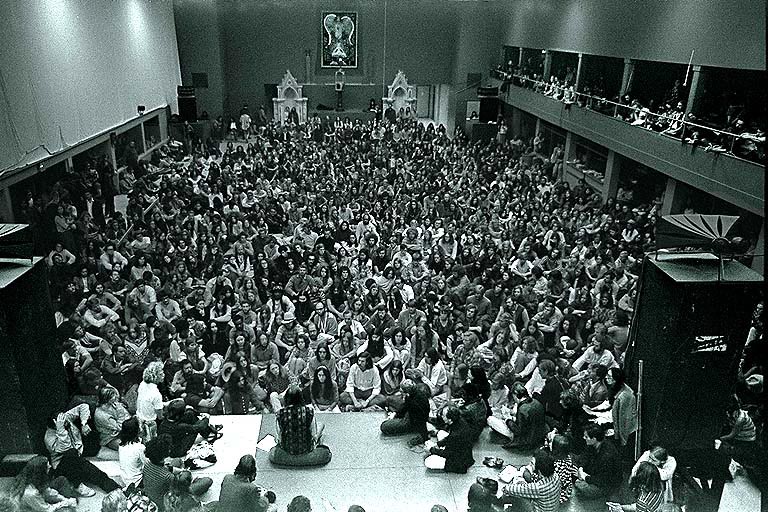
After the student strike in 1968, President S.I. Hayakawa tore the building down, making the pithy comment: "The Commons breeds revolution." Replaced it with the Student Union - lots of little rooms where groups stay isolated. But in its day, the Commons was the intellectual and cultural ignition point for everything that was Happening in San Francisco. Don't let those Berkeley people tell you anything different. Plus you could get a bowl of chili with extra soda crackers for thirty-five cents.

Funny to think of us all after so long. The peacenik table in those early years -- '61, '62, '63. We were lit majors, polly sigh majors, philosophy majors and biology majors, mostly dressed in beat war surplus peacoats or field jackets and scruffy beards or Cost Plus Guatemalan peasant skirts with handmade sandals and maybe a wool flannel stadium coat- (the kind that had toggles and leather loops instead of buttons) against the foggy San Francisco afternoon. Plus more young guys who didn't attend classes at all, but took the M car out to State to hang in the Commons and eat chili. Future founder of the Family Dog Chet Helms was one regular visitor.

Vietnam was just a worry in the left wing weeklies. The Freedom Rides were beginning but their struggle seemed far away in the south somewhere. Ban the Bomb: that was the issue of the day. The government had restarted atmospheric testing of H-Bombs at their Nevada test site. Radioactive clouds were drifting over the little cowtowns of the west and heading for Vegas. Doctors found Strontium-90 in middle class American mother's milk. "Perfectly harmless," said the middle class American fathers in Washington.

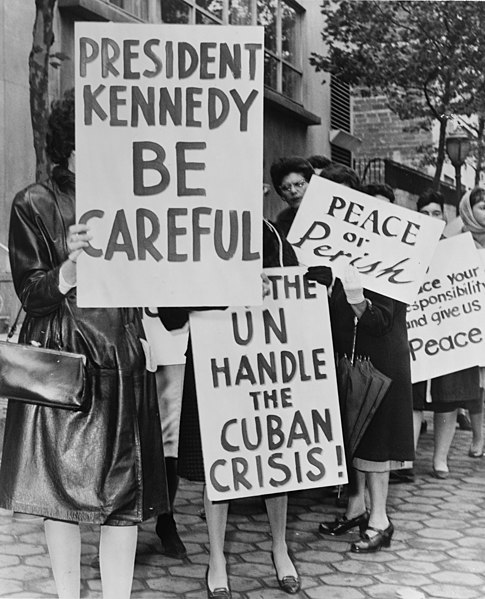
Then there was Cuba. Fidel Castro was nationalizing all the American-owned sugar plantations and the US was unhappy about it. Kennedy decided to embargo all trade between the US and Cuba, import or export. That would hurt the Cubans good. Still, there are limits to pain. According to legend, Kennedy purchased 5000 Cuban cigars for his personal use immediately before ordering the embargo. (It's still in place after nearly fifty years - did it work?)

The cold war was full bore. Commies! Fidel was a Commie, get it? Now those evil Svengalis were were only ninety miles away. Anything could happen! And most likely, anything included an American invasion of Cuba followed by a rain of nuclear warheads and the end of civilization. That's how I figured it.

Redbaiting was also full bore. Complaining about the imminent possibility of nuclear rain was tantamount to admitting you were a communist in some people's minds. A fellow-traveler. One of those students the evil Svengalis liked to dupe! A Comsymp! I was sure that J. Edgar Hoover had my picture in his files.

Yet what had I done? I was an English major, but I preferred to spend my afternoons singing folk music on the lawn in front of The Commons like a peacock spreading his plumage. Calling all girls - look, a beautiful, sensitive poetic folksinger come to serenade you. Come, sit down beside me. But death was lurking in the clouds. Maybe we'd better sit inside.

In my simplicity, it seemed to me if a country wanted to be communist, they should be able to do whatever they want. It's their country. And, in 1962, it looked very much like we were about to invade Cuba and take 'em down. I thought it was a classic case of the big schoolyard bully pushing his weight around, and this cocky little one foot tall midget Fidel Castro lighting another cigar and blowing smoke in the bully's face just before he got creamed. So we would listen to Kaffke's tirades with tolerance and a certain measure of agreement.

He was not the centerpiece of our table by any means. But he had a ferocious intensity and a lack of humor that placed him apart. His one subject was humorless dead ahead radical socialist politics. Unilateral versus bilateral disarmament. Pacifism. Conspiracy. Bay of Pigs. FBI agents under your bed. Always serious, never getting the joke, always dead set on his fixed idea - some vague revolution sometime somewhere that would lead to world peace and kindness and gentle lambs. Except first a big satisfying bloody revolution.

It's not like I thought revolution was a bad idea, but Cuba was a long way away man, and I had gotten my girlfriend pregnant during the summer. Now we were married and making each other's lives miserable, and the future looked like death coming in a little apartment. The Commons was my lifeline to the cool world. I needed it bad. The little lambs would have to wait till I got off work. For me, Kaffke was part of the entertainment.

I wondered about the guy though. Sometimes he'd drop teasers about his past - he'd fought in Korea and received a Purple Heart. He'd been a boxer, fought under the name Ruby, and someone had put him in a novel.

He was diabetic - I saw his syringe and little vials of insulin in a kit he always carried with him. Yet in spite of the disease he had ridden horseback through Mexico from San Blas up to Tepic and beyond, camping out in the jungle and the banana plantations.

OK, maybe he was cool after all. Because THAT was cool.

He'd been married a couple of times and had a daughter - 13 or 14. The idea of one of us having a teenager astonished me. I was thinking about my own little kid to come. What will it be like to have a kid? I imagined us living in Greenwich Village and having lunch at a sidewalk cafe. She was ten in my daydream and I was a famous young novelist. No wife in sight! Or maybe I'd be a big English professor at San Francisco State and own an imposing house in the hills near Buena Vista Park and there she is getting on the 43 Roosevelt bus -- off to the Conservatory of Music for her violin lesson.

Kaffke was a spectre of my personal nightmare, I think. What if I got to be thirty-five and I still was living with my parents and had nothing better to do than take the streetcar out to State and sit in the Commons all day. The horror!

Castro loomed large in Kaffke's cosmology. One day he got into an argument with a passing Business major. I remember him saying emphatically, "Castro...he is a Saint!" Caught me up, because a day or two before Kaffke was defending his Catholic faith and described himself as a true believer. No, he was a Fidelista first and last in the years I knew him. Cuba Si! Yanqui No! He showed us an incoherent document he had written attacking the American embargo on Cuba, and I began to wonder if he had a screw loose. That would explain things! Yet, although he never graduated he told us he had over 150 units to his credit. That's a lot of incoherent but passing term papers. No, he wasn't crazy in that way. Just mad - really mad inside.

One time Kaffke disappeared and we heard he had a job teaching high school in Angel's Camp, a little town up in the Gold Rush country. Math or civics or something. He lasted about four months, then one morning there he was, back at the table. As an exercise in civic responsibility, Bob had his students write letters to Kennedy criticizing his Cuba policy. The town fathers gave him 24 hours to get out of town.

What motivated a guy like that? I've often wondered. Was he making a principled protest against American colonial attitudes? Was he seeking personal glory? Was he just trying to make a buck? How did he support his daughter? Did he go down to the FBI office and report on the gossip around the Peacenik's table?

I knew J. Edgar Hoover was convinced we were a threat to the American way! What a laugh! We couldn't even get to our next class on time. The Free Speech Movement at Berkeley - which really kicked off the massive student protest phase of the Sixties, was still a couple years away.

I knew plenty of Communists, older guys who would come out to campus and make speeches about class struggle sometimes. They had gnarled up little minds with one fixed idea, an obsession with a worker-ruled economy that just didn't fit the world I saw growing around me. They were just part of the entertainment. The chances of being duped by them were zero. But Kaffke was a generation older than me. Maybe they still made sense to him.

I wasn't surprised when Kaffke hit the front page of the paper on July 1, 1963. He was giving an exclusive telephone interview from Havana. My journal for the day simply notes: "So Kaffke and Lorie (Cantrell) actually made it. They're in Cuba, by way of Paris and The Prague. He's described as 'a 35 year old art student from S.F. State'. He's an art student? He's thirty-five?" They were staying at the "luxurious" Hotel Riviera, guests, along with 57 other students, of Fidel Castro. The students were on a "fact-finding mission", checking out for themselves if Castro had horns. I think they decided he didn't. The article didn't mention who paid for their tickets.

Photo Credits:
Bob Kaffke photo: Days of Rage (Memoirs of the Sixties)

J. Edgar Hoover; Women Strike For Peace Picketers - Library of Congress
Castro & Khruschev:
AP
Peace Symbol: No Nukes North
Hands Off Cuba: Mary Ferrell Foundation

Labels: , , , ,

Thursday, January 25, 2007

Sally Go Round The Roses or At The Langley Porter Neurasthenic Day School, 1964.

"The roses they won't hurt you...the roses they won't hurt you."

What were The Jaynettes singing about anyway? It was the hottest song on our scene up at the Langley Porter Psychiatric Day Care Center for Mind-Blown Freaks, Hysterical Teenagers and Proto-Hippies, and that included me, Peter B. and Loretta W. We'd play that weird kids song, Sally Go Round The Roses, over and over. That and Buffy Sainte-Marie singing "I'll reel and I'll fall and I'll rise on Co-dine"

It was September, 1964. I was in the bughouse after finding myself hanging by my thumbs out the bay window of our flat on Golden Gate Avenue, Hayes Valley, San Francisco. Laughing.

It hadn't been such a bad summer, really. For one thing, A Hard Day's Night came out, and everyone I knew was busily revising their opinions about rock n roll. The Beatles were, you know - far out! Actually though, I'm not sure we were saying "Far Out!" yet in the summer of 1964. But we definitely would not have said they were "Totally cool!". 'Totally' was still the province of as yet unheard of Valley Girls.

Maybe we said the Beatles were hip to the jive! Hep to the haps! I will go look in my 1964 journals. Meanwhile...

Top 40 was the steady background noise on our totally cool underground midnight hi-fi radios just like on every other young person's radio in America - squares and coolguys, beatniks, accountants, soldiers, FBI agents, we all listened to the same 40 songs over and over. That was all there was, except for KJAZ and KIBE, our jazz and classical stations, and KDIA, the r&b station across the bay in Oakland. In San Francisco, Top 40 was KYA, the Boss of the Bay, and the hippest DJ was Russ "The Moose" Syracuse, who had the midnight to dawn slot.

Oh sorry, I digress. I was plugging Hard Day's Night. The Beatles had been around all year but it was the movie that changed everything among the hippies.

I didn't know quite what to make of it when Bill Laird, my bearded beatnik photographer friend, told me I HAD to see A Hard Day's Night. A teenager movie? Well, OK...But as soon as the Beatles split into the baggage car and started singing "I Should Have Known Better" and John whipped out his harmonica and all the little birds were grinning in the boxcar too - Linda Lovely and Bill and Muttsie and I were all hooked, dazzled, thrilled. We stayed to watch it three times.

Hey, they were the Fab Four, and they were just as cool as we were! How could that have happened?

The Beatles blew into our lives and nearly took over. I dreamed I was friends with John and Paul. The 1964 presidential election was coming up - and on our bay window we posted a sign, RINGO FOR PRESIDENT. I bought a Beatles fan magazine. We cut out the photos and got stoned and made Beatles collages. The sound track from Hard Day's Night never stopped. Even Bach's Suites for Unaccompanied Cello, my previous favorite record, was gathering dust. We all listened to Russ the Moose with fresh ears. Even Peter and Gordon sounded cool. They were English! They had Beatle cuts!

"I don't care what they say, I won't stay in a world without love..."

Another song I was mad about, now forgotten, was Shirley Ellis' "Let's Get Down To The Real Nitty-Gritty." Oh man, I can still hear those horns in my head doing their downslide. They thrilled my insides.

"Some people know about it, some don't."

I guess I know about it, I thought as I hung out the window by my fingernail fragments. Enough of grim reality. Enough of suffering. I'm shutting my mind off as of this moment. Here I go! Into the great eternal Now! Yes!

Having made my decision I climbed back in through the bay window and waited expectantly for the Great Now to appear. What would it look like to live with no past to remember, no future to groan over? No future left or past. The Zen moment. Ah! An apple! Shall I touch its blistery skin?

So, the next day I'm sitting cross-legged in Washington Square, North Beach, talking to an older friend about my newfound decision to eliminate the negative, discard the past and refute the future. I'd forgotten Chuck was studying to be a psychiatrist. And that he had a part-time job in the same office as my Dad.

Next thing I knew it was Thorazine and "Sally, don't you go downtown." I was in the Langley Porter Psychiatric Institute, the bughouse, with Peter B., later one of the founding Diggers, also having a momentary lapse of judgment, and Loretta W., the first dyke I ever knew.

Hey, if I called her gay -- that would be an anachronism too. In September 1964, the sexes were divided into straights, dykes (butch or femme) and fags. And I was totally blind to the offensive, dehumanizing implications of those words. Peter B., on the other hand, saw them perfectly clearly. I was a little in awe of him. He had a lofty intelligence. He stood on the sidelines, thinking, smiling ironically. He was a Ponderer.

Anyway, Loretta and Peter and I were pals. After a hard day at the bughouse, Peter and I would adjourn to a Divisadero Street r&b bar for a quick shot of red-eye. I studied his words, his facial expressions and his half-smiles. I wanted some of that east coast hipster cool, too.

Loretta taught me all about committing suicide and how it might get you into Langley Porter. She was older than me - at least thirty - and had had a sad awakening in the shower with her Marin County ex-lover.

"Saddest thing in the whole wide world - see your baby with another girl."

Loretta looked just like George Harrison. Pixie cut. Rail thin. Blue jeans, scuffed tennies and a man's dress shirt with the tails hanging out. Screwy as a loon but much funnier than a loon. We played badminton together and went roller skating together and laughed at each other's cracks in group therapy. We drove to LA over Christmas and slept at her other ex-lover's house in Coldwater Canyon. There was nobody home so we drank the lady's scotch and looked out over the LA lights and played the brand new Beatles '65 continuously and non-stop. And had a fine time, just the two of us.

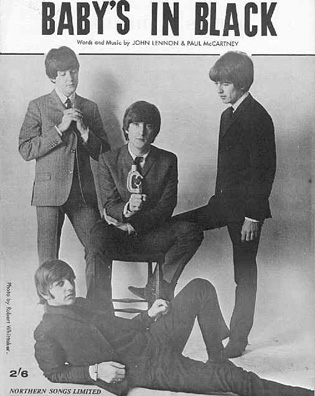
"Oh dear what can I do - Baby's in Black and I'm feeling blue, tell me oh what can I do?."

Peter never laughed. He was New York sardonic. But he was funny too. And he saw deeper than me or Loretta. We were sad clowns but he saw the truth about the corruption of the world. Or at least he had thought about it, while Loretta and I were more thinking about the Beatles and the ouch inside our respective hearts. When we felt anything at all. Which was hard to do when you're loaded on Thorazine.

I gave up on the Thorazine after a couple of weeks. Decided I'd rather suffer than feel nothing. Than I checked out and moved to the Haight-Ashbury, not ready to face my future, but definitely ready to get into my present. Seems like all the hippies were migrating into that neighborhood - and that's where I wanted to be too. Knowing the Beatles were coming along with me. I never saw Loretta no more. But Loretta, if you're out there, thanks for being my pal when I really needed a pal. I never have forgotten you.

Langley Porter pic from their web site.
Hard Day's Night LP cover from Blogcritics Magazine
Sally Go Round The Roses 45 from Head Heritage.
Nitty Gritty 45 from my collection
Baby's In Black from Beatles Sheet Music

Labels: , , , , ,

Tuesday, January 23, 2007

Last Days of Playland-at-the-Beach

Note: This is Part 3 of the Playland Story. It's full of occult hippies and glamorous pop stars and stuff you'll want to read about -- but if you came in late, you might want to start with What Happened to Playland at the Beach? just below.


By the mid-Sixties, Playland at the Beach had lost it's magic, even for me, and certainly for the Whitney family who owned the park. After George Whitney Sr., its entrepreneurial genius and founder, died in 1958, the family business slowly disintegrated in law suits and ill will, with the children -- able people in their own right -- battling their mother who still controlled the park and who finally forced them out of management roles.

If I ever went to Playland, it was late at night, probably with a carload of hippies who had the munchies. The Pie Shop still sold fourteen kinds of pie, and the Hot House next door still sold enchiladas we could eat sitting on the seawall across the highway. Skateland, the roller skating rink across Balboa Street from the Midway held on, and George Whitney's collection of Victorian fortune telling mechanical gypsies, peep shows, steam pianos, and a working toy carnival made entirely out of toothpicks were still on exhibit, but somehow they weren't trippy any more.

Yet, in 1969, as the old world of Playland ebbed, across the street the brave new plant of San Francisco pop culture was sending out a hot tendril.

The Family Dog, the rock dance commune centered around original hippie Chet Helms, lost its lease on their Avalon Ballroom headquarters and moved west, out to the beach, out to a rickety wooden building where generations of San Franciscans had come to eat fried chicken, roller skate, play with their slot cars and now...dance to the Grateful Dead.

Soon longhaired freakos, velvet swathed teen heart throbs, spotty faced boys and undercover narcs were converging on the fog-shrouded building across the street from the kiddie sailboats dripping in the foggy night dew. The guys running the ski-ball concession looked at each other incredulously as Pigpen's blues organ drew the few lingering drunks across the street.

Monday nights acid guru Steven Gaskin was filling the same hall with a kind of revival meeting for hippies called the Monday Night Class. I can't beat Albert Bates description: "Monday Night Class became a weekly pilgrimage of throngs of hippies from up and down the coast, from high schools and university campuses, from army bases and police academies, from mountain communes and Haight Street crash pads. Thousands of people, in various states of consciousness, came with tamborines and diaphanous gowns, love beads and bangles, Dr. Strange cloaks and top hats with feathers. The open-ended discussions ventured into Hermeneutic geometry, Masonic-Rosicrucian mysticism, Ekenkar and the Rolling Stones, but opened with a long, silent meditation and closed with a sense of purpose."

Gaskin was teaching the kids the original Huxley-Alpert-Leary hippie vision of LSD as a life-changing sacrament, not a thrill ride or a Friday night high. Challenging them to change their lives, not just trip. And the continued success of The Farm after nearly forty years implies he was to some degree successful at it.

I could never take him seriously though. Not his fault - but to me he was just good old Steve Gaskin, my hip grad student acquaintance at SF State who had a teaching assistantship in creative writing, I think. I remember when he came back from Mexico absolutely charged with psychedelic adrenalin. The guy had had a life-changing experience down there and he was telling everybody who would listen. But I wouldn't. Like Jesus said, "A prophet is not without honor, except to his old pals." Or something like that. But basically I thought Steven was okay.

But there were all those other guys climbing onstage at the Avalon. OK, I'm not a big swami fan, and my prejudice colors the rest of this picture. I was at the Avalon the night Allen Ginsberg introduced Swami Bhaktivedanta on stage. He was the guy who introduced the Hara Khrisna movement to the West. The two of them chanted Hare Krishna together for a while, and clicked their little bells and Om-ed it. I thought "Hmmmm... is there something in this?". It was interesting. I've still got the poster for that night in a box under my bed along with a lot of other remnants of that life.

Well, it turned out there was something in it. There was macrobiotic food and colon cleansing and kundalini force for the masses and Esalen Human Potential Seminars, Khrisna Consciousness with extra child abuse for no charge, The Children of God, Werner Erhard, transcendental levitation and the whole soggy descent into dopey earnest astrological unreason that has plagued the rest of the twentieth century. Thanks a lot, Allen. Thanks a lot, Chet, for letting that fakir onstage.

Hmm, I seem to be wandering off here. Just to wrap up the obvious, the hard beat Sixties I had entered as a seventeen year old kid were over. Playland would be closed and ripped down in 1972. The Family Dog was going broke. And the soft and goushy, it's-all-about-me Seventies were on us. Help! Run!


Photo 1: Playland's End. September 24, 1972. Photo by Patrushka.
Photo 2: Site of Playland today. Photo by Patrushka.

Labels: , , , , , , ,

Monday, January 22, 2007

What Happened To Playland-at-the-Beach?

Is it true all good things must finally come to an end? It was certainly true for Playland at the Beach, the great amusement park that once promenaded along the western coast of San Francisco, out by the edge of Golden Gate Park. In its heyday in the Twenties, Thirties, Forties, even into the late Fifties, the place rocked with kids and young people and sailors and fun - and they measured their cost in nickels. San Franciscans didn't need a car to get there because Playland was at the end of a couple of streetcar lines, as amusement parks usually were in the early twentieth century.

A traveler climbing aboard the B car heading downtown late on a weekend afternoon in the 1950s might find himself surrounded by packed-in black families from the Fillmore District. They were heading home tired, cranky and sandyfooted after a terrific cotton candy and enchiladas day. Latino families from the Mission, Irish and Italian families from the Richmond and Sunset districts, city teenagers mixed with teens from San Bruno all the way to San Mateo twenty miles down the brand new Bayshore Freeway, they were were hotfooting down the Midway, looking for fun, looking for thrills, looking for girls. On sunny days in September, Ocean Beach itself, across the Great Highway, was packed with families on blankets listening to big black portable radios or dabbling their toes in the ferociously cold surf. As Bugsy said to Shifty back in 1957, "I want to stick around while I get my kicks!"

I don't know what happened, but parks like Playland were closing all over the country. Perhaps the opening of the original Disneyland in 1955 had something to do with it. Week after week Walt Disney used his television show, conveniently named Disneyland, to flog the wonders and delights of his new Magic Kingdom. Maybe the traditional family-oriented park at the edge of the big city was looking a little tawdry and old fashioned. Most young people had access to cars now. They could drive to big modern theme parks like Great America, the Bay Area's first. It was (and is) just off the Bayshore Freeway, and, unlike Playland way out at the edge of a labyrinthine city, is easily accessible by millions of Bay Area families.

Besides, by the 1950s, the blue collar and middle-class families that formed Playland's primary market were leaving the City in droves, off to their new martinis and togetherness playgrounds in the suburbs. But let's not talk about that sorrowful day in 1954 when the moving van arrived at our beautiful San Francisco house on 47th Avenue two blocks from the vast, fogbound, eternal Pacific ocean and trucked the furniture to our new, open floor plan, wall to wall windows and a patio, subdivision miracle stranded on a mudflat on the San Francisco Bay. It's too traumatic. I think I've been trying to get back home my whole life.

The young urban professionals who took their places, filling the swinging Tony Bennett bars on Union Street, were not likely to suggest a date night at Playland riding the Wild Mouse.

More tomorrow.
Photo of Playland, 1958 by my brother Gary.

Labels: , , ,

Wednesday, January 17, 2007

Chet Helms, Margarita and Me


Let me start by saying Chet had his moment of glory - a long, extended moment - as proprietor and maitre'd of the San Francisco Sound. Along with Bill Graham, he made sure the Jefferson Airplane, the Grateful Dead, Quicksilver Messenger Service, Santana, Big Brother and the Holding Company and, of course, Janis Joplin got right to the front tables and smoked the best dope in America.

I knew Chet pretty well in the Haight-Ashbury days, and we stayed in touch for a long time after. Here's a story about what manner of man he was.

At nineteen I fell in love with a beautiful and cruel seventeen year old named Margarita. On our first date she danced naked in the rain. I thought this stuff only happened in books! I'd never met someone up to her style before and I fell hard and passionately. We traveled across America together and when she'd had enough, she just hitched a ride with a trucker to her home town of San Bernadino.

Not to put too fine a point it, Margarita ripped my heart open and drove me insane. But she was worth it! What a girl!

OK, fast forward twenty-eight years. I'm happily married, a salaryman with a big New York career, living in a heartwarming but drafty Victorian in an country-quaint New Jersey town, watching old Bob Hope movies on TV with my daughter Kirstie and generally having a pretty good time of it.

Then, suddenly, I came down with a high fever. A very high fever. My doctor slammed me in the hospital and I began to get delirious. Fever visions. In the night, tossing on my perspiration bed I suddenly found myself to be nineteen years old again. I was standing under a street light across from Margarita's aunt's house on Effie Street in Silver Lake. I saw lights in the house but I was alone and I began to howl. They were long agonizing pain-wracked cries of grief for Margarita, the lost one. I howled to the full silver moon like a broken wolf or a starving coyote. I was astonished to find a gaping wound in my heart covered with the finest of skins. Not one drop of hurt had evaporated in all those twenty-eight years. And I hadn't even noticed it.

When I got to feeling better, I wrote to Chet about my strange experience. He had been around in those days and knew the players. I never heard back from him, but about three weeks later, I did get a letter - from Margarita!

She was a grown up too. Lived up in the Rockies somewhere. Had kids. Still played her flute in the moonlight. She was sorry she had hurt me so bad. She was ashamed of her seventeen year old self.

I was surprised to get her letter. But not all that surprised - I recognized her handwriting right away on the envelope. And I was glad too, because somehow the letter brought some closure that I didn't know I needed.

Margarita had been in San Francisco for the first time in years and she just happened to run into Chet on Market Street and he just happened to have my address in his pocket. So he told her about my letter and gave her my address.

That was Chet through and through. Always right where he needed to be. Always knowing what was going down in all the flats in the Haight. Just had his finger on it. And he still did.

Borrowed the pic of young Chet from Jim McCulloch's blog Stone Bridge. Hope he don't mind.

Labels: , ,

Friday, January 12, 2007

In 1969 Jack Kerouac died...

Here's a little poem left over from my mid-life crisis. Now that I'm up to my Medicare crisis I don't need it any more. ..

In 1969,

Jack Kerouac died.

It was an ignominious death,

he puked his guts into a toilet,

moaned to Ste. Therese,

and left his mother to carry on.

After all those miles.


In 1969,

Some outlaws of art were still young -

rock desperadoes,

poets of armed robbery,

exiles on main street

But Neal Cassady was dead already

and John Lennon was fixin to die.


They met their rightful destiny.

But what happens to the outlaws who go free?

Whose sun-bleached hair grows grey?

Who have to walk the seacoast in a mothbitten overcoat

or raise a family?


What happens to bad mothers who don't get shot?

when their time runs out and they're still here?

There's all those days to fill when the Muse won't show - -

watering the geraniums

or teaching English to high-school gunmen

with slower draws than they had.

With sleeping in their cars,

answering the phone at the Institute for Parapsychology,

seeing their kids grow up,

looking into soft dead eyes forever in their dream.


Photo by Patrushka

Labels: , , , ,

Monday, December 04, 2006

Song for Relay Tornfoot

Relay, if you are still on this planet
And bones not moldering with Wyatt Earp's in a Colma graveyard,
If you are still scuffling the streets of the Fillmore
In toebrokethough stained tennis shoes and
not chained in a state institution somewhere,
If your first-born child knows your face and thinks of you at all or even if she don't, here is a song for you, sad-eyed leper.

First saw you barefoot, cross legged, eighteen, Lowell High School drop-out, Don Baudelaire's new sidekick - you walked for peace together LA to San Francisco in the long ago 1962 you were arrested went to jail it was all the same to you. Before your intelligence was sucked from you like you juice from an orange.

You and Don lounging cool on our ratty mattress, bare except for Margarita's unraveling Mexican blanket, dirty red and yellow. Baudelaire laughing as usual, heavy black rimmed glasses coming down his nose, spare black mustache crinkling up. You're heroes to us, weary warriors of nonviolence.

Yes you were beautiful that morning surrounded by hippie girls, Relay, they loved you and made much of you – Teresa Sweetness, red haired, freckled, seventeen, wife of Mike Squaredoff, stuffy, square, and doctrinaire - saving to move to Yugoslavia to be free of the capitalist system. Teresa just wanted to be free of her mother.

And Leslie Chapman cozy between you and Baudelaire. She's Don's girl friend, straight black hair, satin skin, also seventeen. She lives with her rich mother in Pacific Heights but goes off balling with Don on his motorcycle.

Leslie, sweeter than Sweetness, brought over her Bob Dylan album. Nobody's ever heard of him. "His voice is so scratchy and nice," she says, "he doesn't sound smooth like a singer."

Relay, you sprawled there smiling, quiet, what were you thinking? In with these peacenik hippies, and hippies are white, all but you. You're part of this scene of socialist politics and blue workshirts and Sing Out! Magazine, and pot smoking, beat poetry, and Miles Davis. What brought you to peace marches and demonstrations and this dusty mattress?

The four of you so young and cool and free as I look back on you from 2006 - your long sunny, moony youth still ahead of you. No pain or suicide or madness is evident as you pass the gallon jug of Val Vin burgundy from hand to hand.

Relay, two years later when I was out you hit on my wife. Me -- your friend. I was pissed when she told me but you were too sad to stay angry with.

You had a blue sweater color of the sky - I could always see you coming through the fog. I'd be home lonely reading comic books, cutting out magazine pictures for collages, wondering what the fuck, with baby daughter napping in the bedroom. We'd get high and laugh and listen to Lighting Hopkins records, then you'd leave me - stoned and alone.

Relay in blue sweater and torn shoes, you had a wife too - sandy blonde beat girl who stuck by you and had your child. I came by to see you in your little madras bedspread one room pad on Fillmore Street but you were gone to score. She was alone and large with child. I felt sorry for her, only white girl on the block, vulnerable and you out to cop. But she was tough and capable and took care of both of you in the lowdown Fillmore pads you lived in - none for long.

Relay, one blue day in 1964 we drove down to Big Sur in my liver colored Studebaker Lark. Wandering back roads looking for a place to camp we met Ferlinghetti in a field - like a sage from the older world, like an Elder from Olympus in the fields of Big Sur. We camped by a stream and smoked pot as the sun went down on trembling creek waters. We all believed that summer 1964 you could get high smoking scotch broom - and we spent an afternoon in the fields of broom by the roadside picking and dodging bees. The smell of it -- if only it had worked - angel Pacific glory.

We stopped at Big Sur Hot Springs (later Esalen Institute for new age wisdom gestalt therapy). Mimi Baez was singing at crowded party Big Sur hippies congregating in smoky dark dim kerosene light, surely after making art all day, wonderful paintings and poetry and novels. Such I still believed was the life of Bohemians. You didn't think so. We waited for sister Joan to come, but she never did

We crashed at a cabin up a canyon, park car at head of canyon and trudged up to it in the mooney dark. One room, no water, bare boards, blonde Viking woman's home to drink Red Mountain burgundy and smoke scotch broom blossoms in the night, hippies on the floor snoring as we toked.

Relay, you got heavier into drugs, heroin I suppose though I don't know and I moved to the Haight-Ashbury. I didn't see you any more except once flitting down a back street looking for a phantom fix - sad specter of the streets.

Last time I saw you was in 1975 on Haight Street. I was crossing the street going into Rodney Albin's guitar shop and you appeared, losteyed. I was dressed in brown you thought I was driving truck for United Parcel congratulated me on getting a well paying gig. We shook hands in the gutter at the corner of Haight and Masonic and you disappeared into the traffic. Disappeared into the traffic like you'd never been there at all. You didn't have the sweater anymore.

Labels: , , , , , , , , ,